Practice and Performance

Athletes and the Arts – The Role of Sports Medicine in the Performing Arts

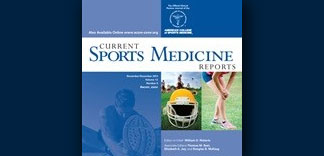
“Athletes and the Arts – The Role of Sports Medicine in the Performing Arts”

Dick, Randall W. MS, FACSM; Berning, Jacqueline R. PhD, RD, CSSD; Dawson, William MD, BS, FAAOS; Ginsburg, Richard D. PhD; Miller, Clay MD, MFA, PMR; Shybut, George T. MD

Published in Current Sports Medicine Reports, November/December 2013, Volume 12, Issue 6, p. 397-403.

Abstract

Performing artists are athletes. Like athletes, performing artists practice and/or perform most days with little off season, play through pain, “compete” in challenging environments, and risk career-threatening injury. Athletes and the Arts is a multiorganizational initiative linking the sport athlete and musician/performing artist communities. Performing artists of all ages and genre are an underserved population related to medical coverage, care, injury prevention, performance enhancement, and wellness. Sports medicine professionals are a valuable resource for filling this gap by applying existing knowledge of treating sport athletes (nutrition, injury prevention) while gaining a better understanding of performers’ unique needs (hearing loss, focal dystonia) and environment. These applications can occur in the clinical setting and through developing organizational policies. By better understanding the needs of the performing arts population and applying existing concepts and knowledge, sports medicine professionals can expand their impact to a new patient base that desperately needs support.

Read full article – Athletes and the Arts – The Role of Sports Medicine in the Performing Arts


View Permalink

Performance Anxiety – One Page Fact Sheet

Performance anxiety, commonly referred to as “stage fright” in performing arts contexts, is a distressing and disabling condition that affects performers of all ages. At least half of all performing artists, regardless of age, gender, and talent or experience level, report problems associated with performance anxiety.


Download a one-page fact sheet (PDF) on Performance Anxiety.


View Permalink

Focal Dystonia – One Page Fact Sheet

Focal dystonia is an abnormal movement disorder that develops when a person is attempting to perform a specific task such as playing a musical instrument. It shows in the loss of voluntary muscle control while playing an instrument. Focal dystonia can affect any group of muscles in the body including the face, lips, tongue, neck, arms or legs.


Download the Focal Dystonia (PDF) one-page fact sheet.


View Permalink

Athletes and the Arts: An Amazing Representation

Amazing imagery demonstrating athletes and the arts!


View Permalink

Getting to the Heart of the Matter: Connecting the Dots to Improve the Well-Being of Musicians and Pro Football Players

“The music that can deepest reach, / And cure all ill, is cordial speech.”
-Ralph Waldo Emerson, writer and philosopher (1803-1882)

By: Bethany Ewald Bultman, President of the New Orleans Musicians’ Clinic and Assistance Foundation

New Orleans, known locally as the WHO DAT nation, is world-renowned for good music, good food, good times and our passion for our beloved Saints football. As the birthplace of the USA’s only indigenous art form – jazz – tourists from around the world visit our city for Mardi Gras, New Orleans Jazz & Heritage Festival, Halloween, Essence Festival, and a plethora of famed music clubs and community festivals. And, on February 3, 2013, the NFL Superbowl. At all of these events and countless conventions throughout the year, local musicians are the heartbeat of New Orleans: a vital contributor to the city’s economic viability and cultural identity.

Even before Hurricane Katrina’s floods devastated the city of New Orleans in August 2005, many musicians faced perpetual economic hardship and suffered poor health as a result of limited access to affordable healthcare and “death by lifestyle.” Nevertheless, their music sustained us and them. It got me thinking:Does playing music as a response to hardship increase a performer’s sense of well-being and help increase his or her lifespan?

At the New Orleans Musicians’ Clinic, 87 percent of our 2,400 musician patients receive medication for more than one chronic condition: hypertension, diabetes, cardiovascular disease, and asthma,to name a few. In part, these illnesses can be attributed to our zesty and wickedly unhealthy lifestyle paired with years of lack of access to high-quality, affordable medical care. Before our clinic was founded in 1998, New Orleans’ cultural icons continued to endure an epidemic of poverty and health care outcomes rivaling those of third-world nations. While the city’s tradition-bearers were celebrated the world over, at home, many lived hand-to-mouth, outside mainstream social and economic systems.

Our musicians come from communities that reflect both the pervasive poverty of New Orleans and the power of our culture to overcome adversity. As of the late 1990s, New Orleans was first in the nation in number of children living in poverty, second in low-birth-weight babies, and third in infant mortality. According to the Centers for Disease Control and Prevention (CDC), one-third of New Orleans residents were obese, making it the “fattest” city in the country. Since then, things have not changed much for the average African-American in the city.

According to “A Portrait of Louisiana,” the 2009 report from the American Human Development Project, life expectancy for African-Americans in New Orleans was 69.3 years, putting it on a par with North Korea, Colombia, Venezuela and Uzbekistan. The poor health indicators for the city as a whole are further compounded for musicians struggling to perform in an unhealthy work environment for hours, often working late nights for low pay in smoke-filled, noisy clubs. Other stressors include separation from their families while on the road, performance anxiety and other occupational health-related hazards.

Yet these athletes in the arts often play six to eight hours a day, seven days a week. They live to play and their music uplifts all who hear it. Clearly music is a calling which breathes life into its performers. And now let’s contrast this to the health outcomes of highly paid professional football players.

A records-based study of retired players conducted by the National Institute for Occupational Safety and Health (NIOSH) published in the American Journal of Cardiology in March 2012 noted that by the end of 2007, of the 3,439 former NFL players NFL, 334 were deceased. (Based on estimates from the general population, NIOSH anticipated 625 deaths.)

The results revealed that for those who played pro football at least five seasons between 1959 and 1988, nearly 38 percent of deaths from the pool of retirees were linked to heart disease. This came as a surprise to me, as I had assumed that football players had healthier hearts than average Americans since they’ve spent decades focusing on and building up cardiovascular strength in ways that the broader population likely doesn’t.

So I ask myself, what factors contribute to the longevity of some of the New Orleans musicians who don’t enjoy the same advantages as professional football players? As professional athletes, football players are cared for by top-notch doctors, physical therapists, nutritionists and even their agents. NFL retirees are more likely to have health insurance and memberships to health clubs than musicians of a similar age, particularly given retired NFL football players’ ability to pay for private insurance. It seems likely that increased availability to health care would mean that ex-players could receive more frequent cancer checkups, which would lead to early detection and more successful treatment.

The NIOSH study revealed troubling occupational data:

  • African-American players had a 69 percent higher risk of dying from heart disease than their white counterparts.
  • Players with a Body Mass Index of 30 or more during their playing careers had twice the risk of death from heart disease compared to other players, confirming traditional concerns about the effects of obesity.
  • Defensive lineman had a 42 percent higher risk of death from heart disease when compared to men in the general population.

In a subsequent article published on September 07, 2012, Robert Shmerling, M.D., Faculty Editor, Harvard Health Publications, examined the data from the NIOSH study and suggests that repeated head injuries at high speed could cause brain disease years later that resemble ALS or Alzheimer’s disease.

  • The risk of death from Alzheimer’s disease or ALS was nearly four times higher than expected.
  • Those who played a speed position (such as quarterback or receiver) had a risk of dying from Alzheimer’s disease or ALS that was more than three times higher than those playing “non-speed” positions (such as linemen).

What the NIOSH study does not document is the overall quality of life of former NFL players. I can attest that New Orleans musicians’ lives are sustained by the fact that they never retire from performing. Just last week, 101-year-old trumpet player Lionel Ferbos got a pacemaker to increase his stamina for performing with his band at his weekly gig at the Palm Court Jazz Café. I have a hunch that having sports medicine specialists and players host an open forum with New Orleans musicians during SuperBowl XLVII would yield valuable information to keep the hearts beating for performers of both disciplines.

Watch this TV interview with Lionel Ferbos on his 101st birthday.


View Permalink

Practice and Performance in Perspective

In most sports, there are objective measures that can be used to show individual improvement.   These include variables measured by time (speed, quickness agility, pitch speed) or distance (jump height, long jump, javelin throw).   Just get a baseline, train, and re-evaluate.  You are either faster or slower. Even team sports have a metric – the final score.

Defining improvement in performing arts is more subjective (similar to such sports as gymnastics and diving).   There may be judges or just the perceptions of the audience.  The element of creativity is even more pronounced in the arts and even harder to define.   Yet performing artists spend countless hours practicing to get better; a “better” that may not be able to be objectively measured.

So what is the optimal number of hours to practice?   At what point do additional hours of practice hurt rather than help performance?

Let’s look to the athletics world for some guidance:

  • At the college level, NCAA athletes may participate in no more than 20 hours of practice a week, with one day per week completely off.   These rules are in place to allow student-athletes time to be students, but also for health and safety reasons.   At the same NCAA institutions, how many of the music or dance students are following this schedule?
  • Olympic athletes have a four-year training schedule that, at a very high level, consists of foundation work, overtraining, technique work and tapering to peak for two weeks during the Olympic Games.  Recovery is an important component of this cycle as well.
  • Coming off an arm injury in 2011, Washington Nationals pitcher Stephen Strasburg was shut down this season after reaching a pre-determined inning count to minimize his risk of long-term injury.  This strategy was based on data that showed when pitchers significantly increase the number of innings pitched from one season to the next, there was a much higher chance of an arm injury.
  • Many athletes cross-train to maintain aerobic fitness while minimizing the mental and physical stress associated with their principal sport.   Soccer players play basketball, swimmers do running workouts and vice versa.
  • When starting a program of walking for exercise, it is recommended to increase your steps by no more than 500 each week.

Many of these findings in the world of athletics can be transferred to the performing artist and you should consider applying these concepts to optimize your talent and longevity:

  1. The ability to identify and objectively measure improvement in each aspect of the performing arts is essential in order to better understand the volume and type of practice necessary to optimize performance.
  2. At some point the number of practice hours may hurt rather than help.
  3. Large ACUTE increases in the time spent physically practicing/performing may increase risk of injury.  If the volume or intensity of practice must increase, do it gradually.
  4. Consider FOCUSED practice segments with different goals in each session.   Rote repetition for extended periods of time has not proven successful in the athletic world.
  5. Cross-train:Take a mental or physical activity that allows the body to focus on something different.  RECOVER.
  6. Invest in your overall fitness to optimize your skill.   Use 30-45 minutes of your practice time for separate physical activity.

Finally, complement your practice with wise choices related to nutrition, hydration and other lifestyle issues, using this website and related resources as a foundation.  Investing in some of these lifestyle behaviors should both optimize your performance AND make it sustainable for many years to come.

We welcome your comments.

Randall Dick   Fellow, American College of Sports Medicine (ACSM)


View Permalink

Practice Considerations for the Musician (Sean McGowan)

View Practice Considerations for the Musician by Sean McGowan, DMA (DOC)


View Permalink

Video – Musician’s Performance Injuries – Prevention and Treatment – Dr. Mark Brodsky

In this series of videos, Dr. Mark Brodsky speaks with musicians about their performance related injuries and how best to treat / prevent them:


Part 1:

Part 2:

Part 3:

Part 4:

Part 5:


View Permalink
Page 3 of 4 1234